Classic monitoring tools need a parser for every vendor and break when a subject line changes. Argus uses a language model to read the report — like you would.
New vendor at a customer? It just works. The model extracts job, status, items and errors from the mail itself — no configuration.
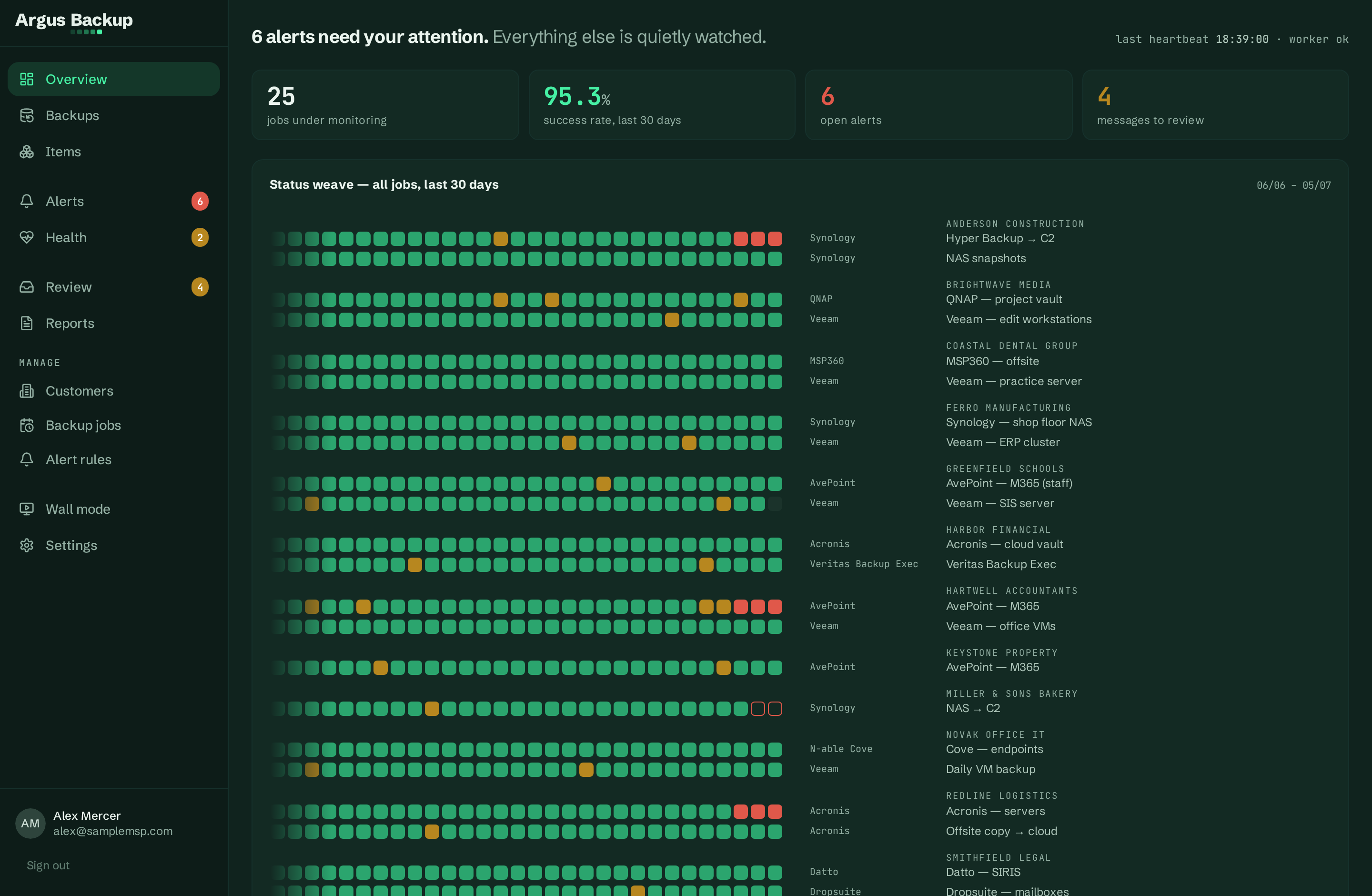
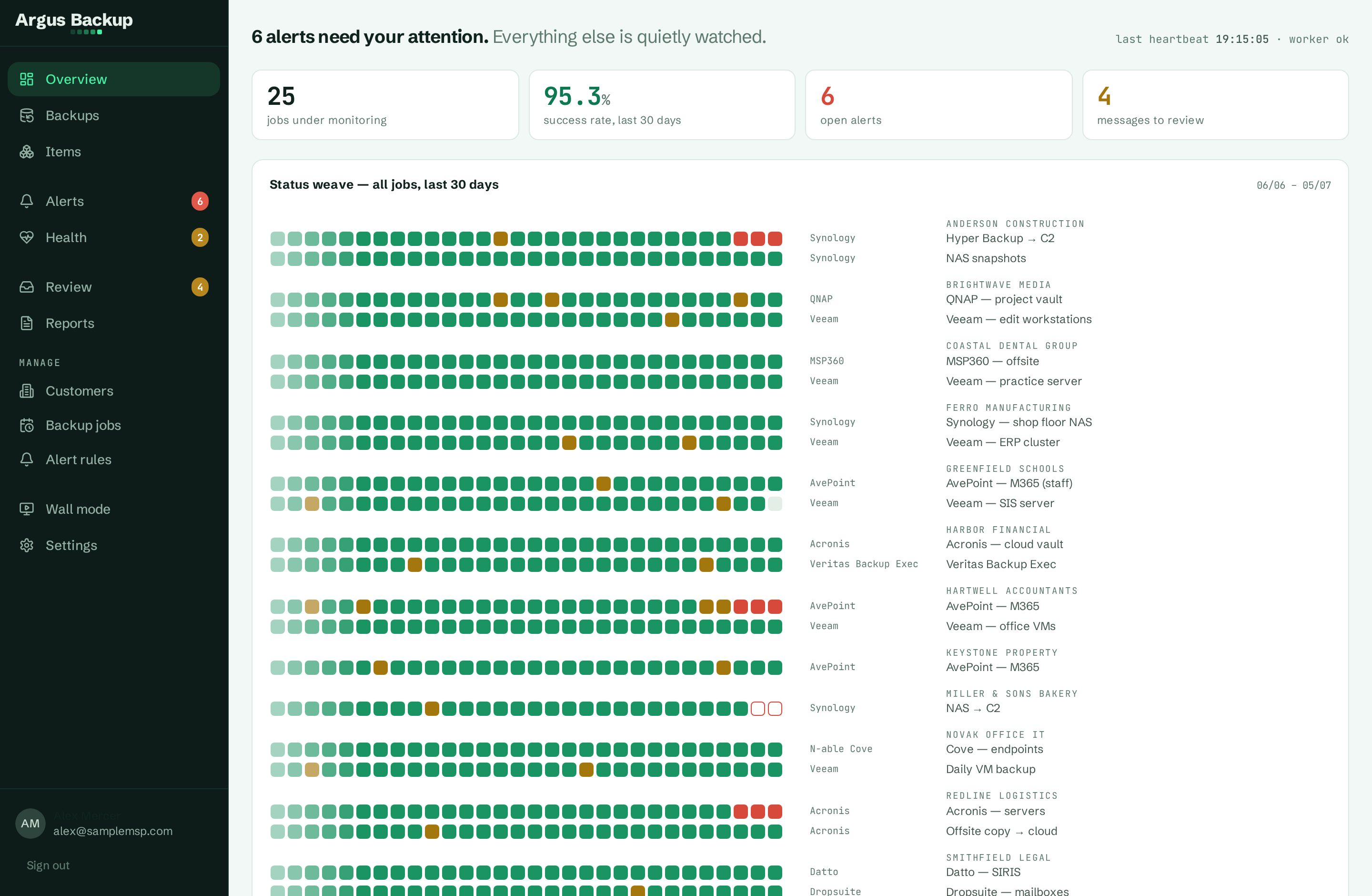
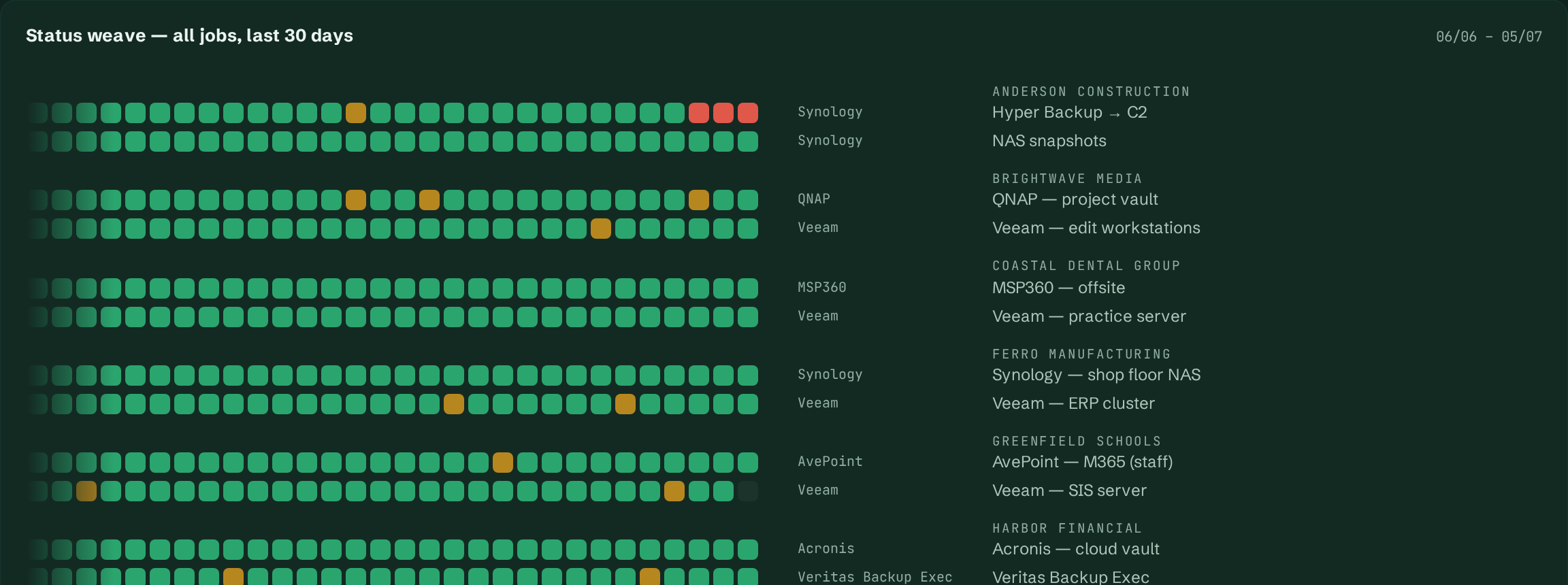
Every job, every day, one glance. The status weave shows 30 days of history across your whole customer base — today on the right.
Missed backups, chronic failures, disappeared items — heartbeat detection with acknowledge, snooze and assign. No alert fatigue.
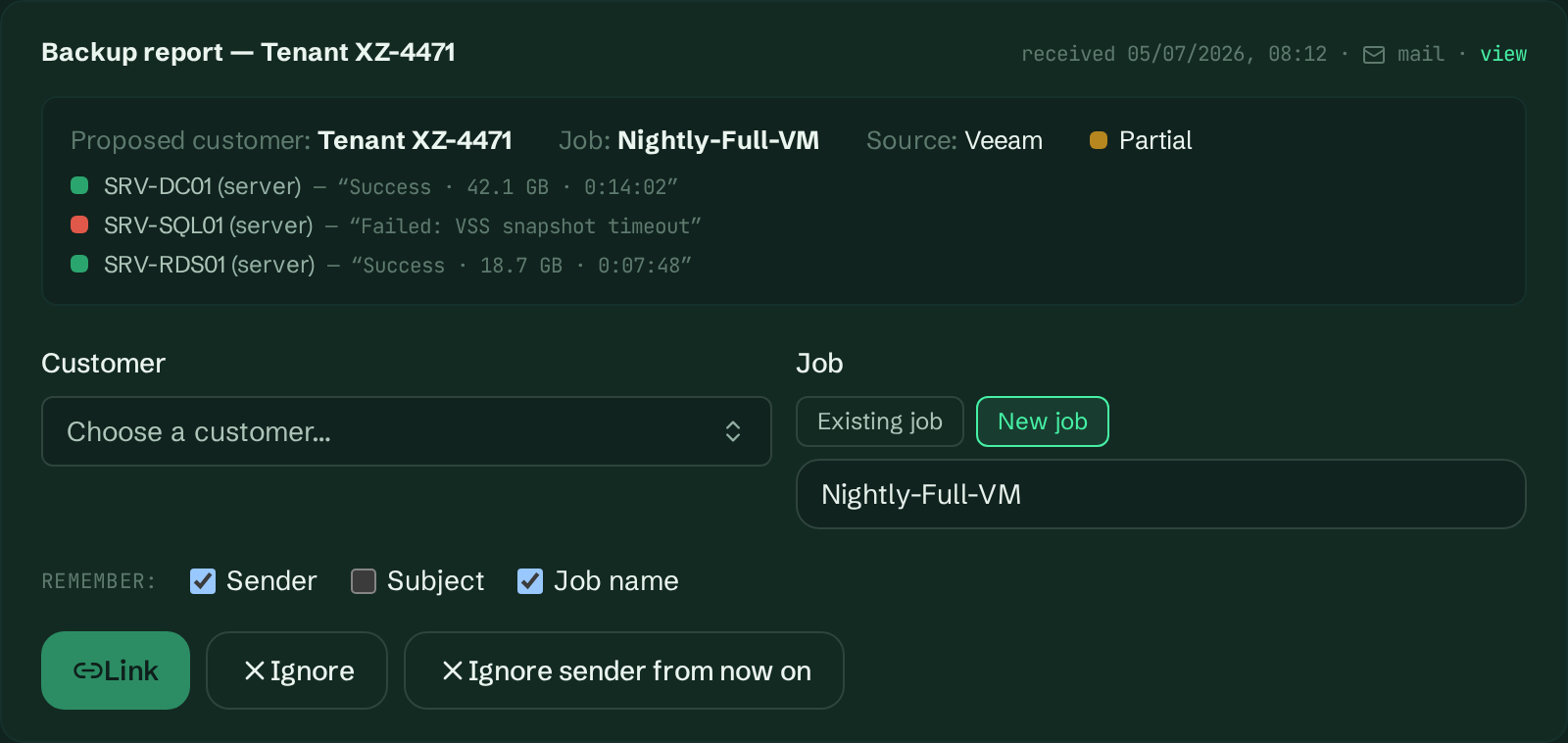
Link a report once and Argus remembers the sender, the job and the customer. The queue empties itself from day two.
Every MSP runs an isolated Argus — own database, own Microsoft tenant, own subdomain. Your customers' data never shares a table with anyone.
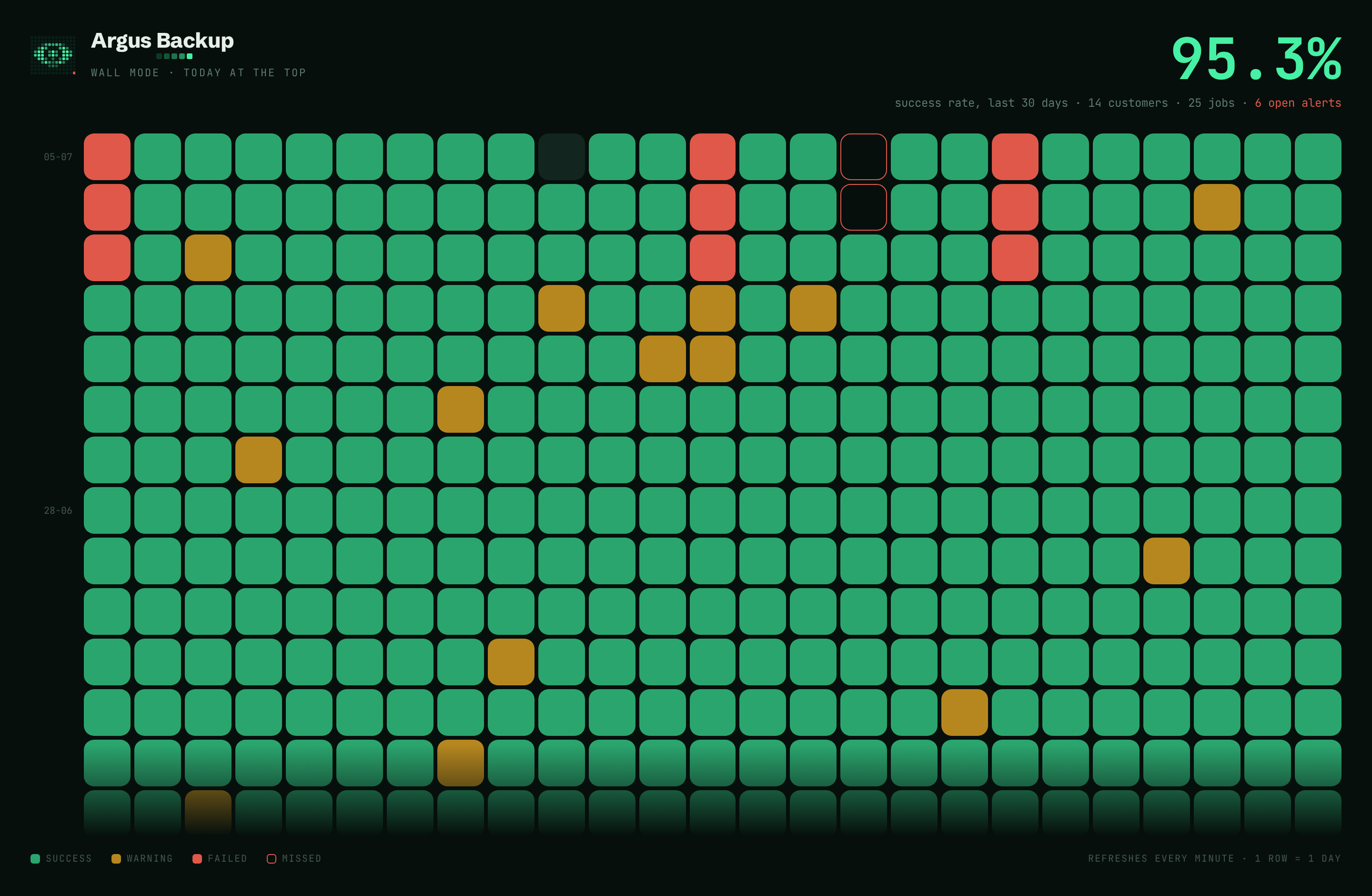
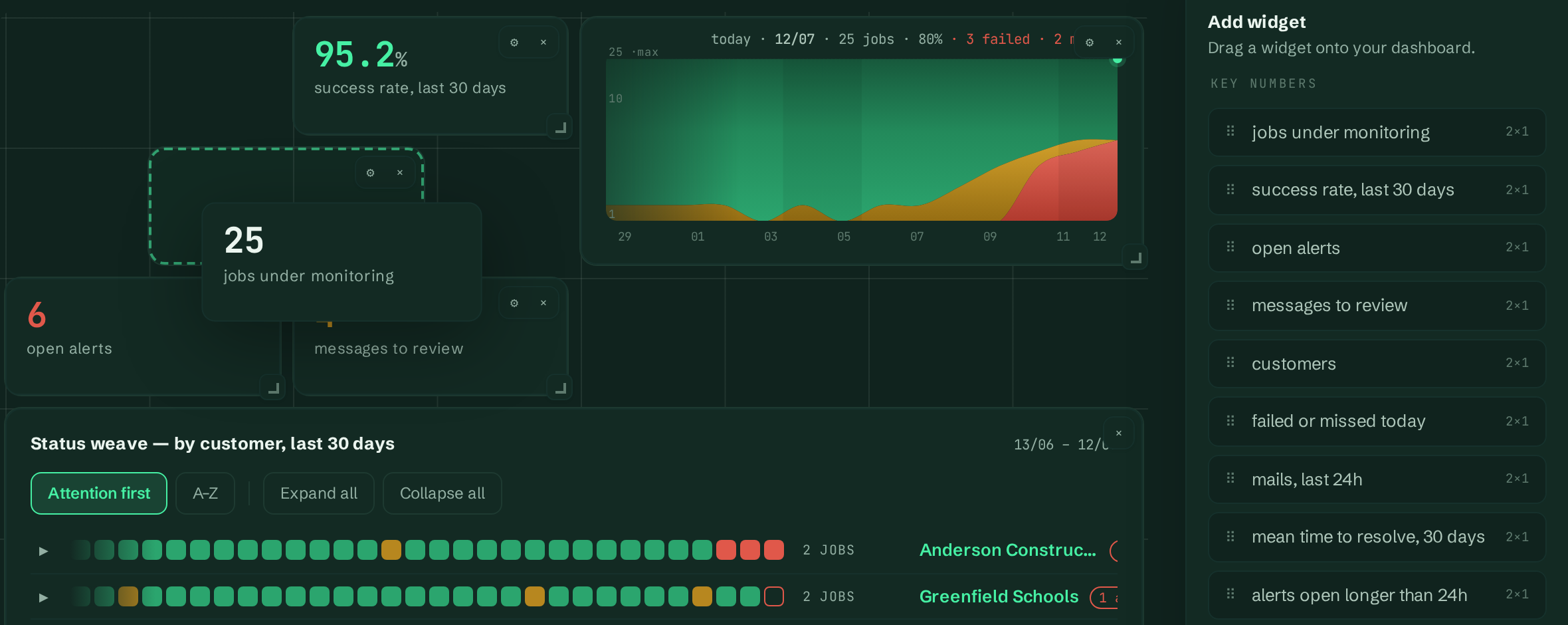
A living status wall for the office TV. Green means calm; your customers will notice it during visits.
Point your backup reports at one mailbox and connect it with the guided Microsoft 365 setup. Argus starts reading within minutes.
Argus proposes customer and job for every report — you confirm. Each confirmation is remembered forever.
From now on reports flow in, the weave fills up, and you only hear from Argus when a backup misses or fails.
Most pilots link 90% of their reports on day one — the rest matches itself.
The status weave is the heart of Argus: one cell per job per day, thirty days deep, across your entire customer base. Today is always on the right.


All screenshots show demo data.
Four things you'll use every day — and mostly won't find anywhere else.

One cell per job per day. A hollow red cell means no report arrived — the failure mode most tools silently miss, because you can't parse a mail that never came. Argus expects every job on its schedule and speaks up when the mailbox stays quiet.

New reports land in a review queue with the customer and job already proposed — including the evidence, straight from the mail. You confirm once; Argus remembers the sender, the subject and the job name. The queue empties itself from day two.

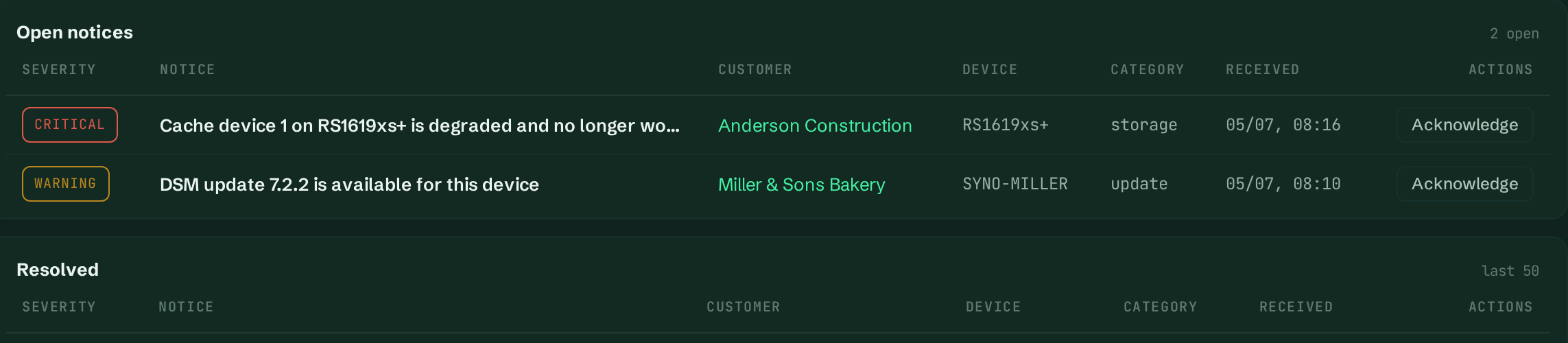
A NAS mails everything to the same address: backup results, degraded cache drives, DSM updates. Argus classifies each message and routes infrastructure notices to their own Health page — so a dying SSD never drowns between two hundred green backup reports. Most backup monitors simply drop these mails.

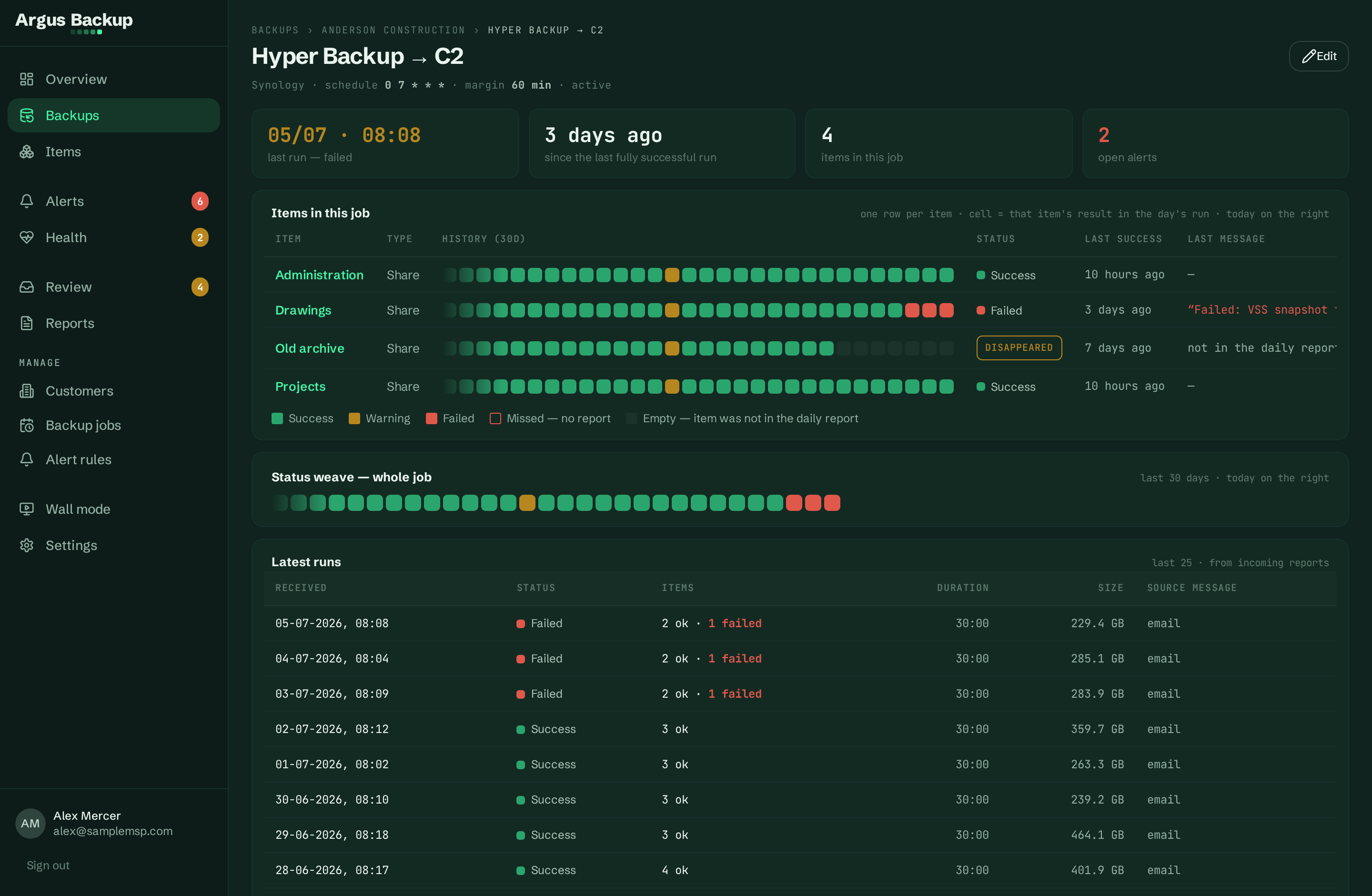
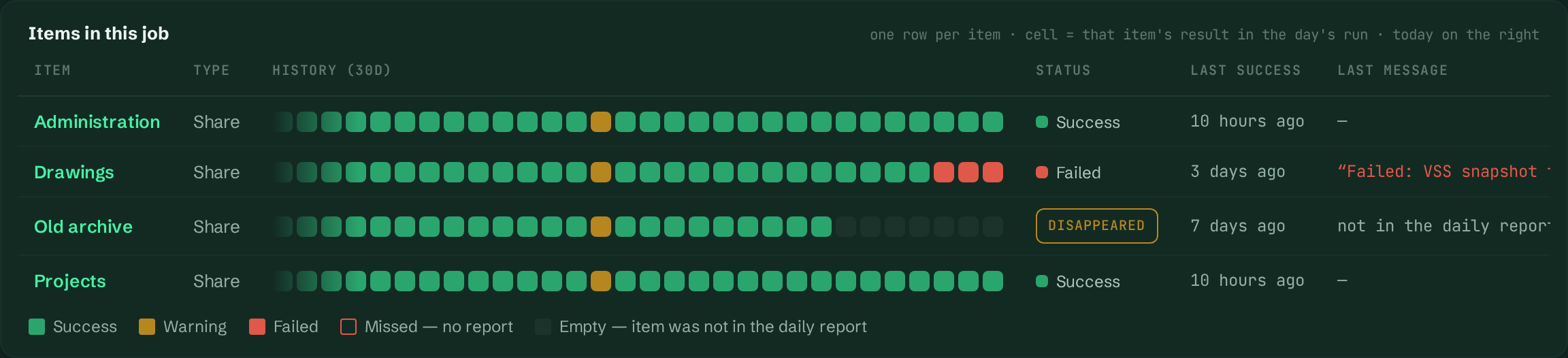
A job that's "green" can still be quietly failing one share, one VM, one mailbox. Argus tracks every item inside every job with its own 30-day trail — including items that disappear from the report, which is how deleted backup sets slip through unnoticed.
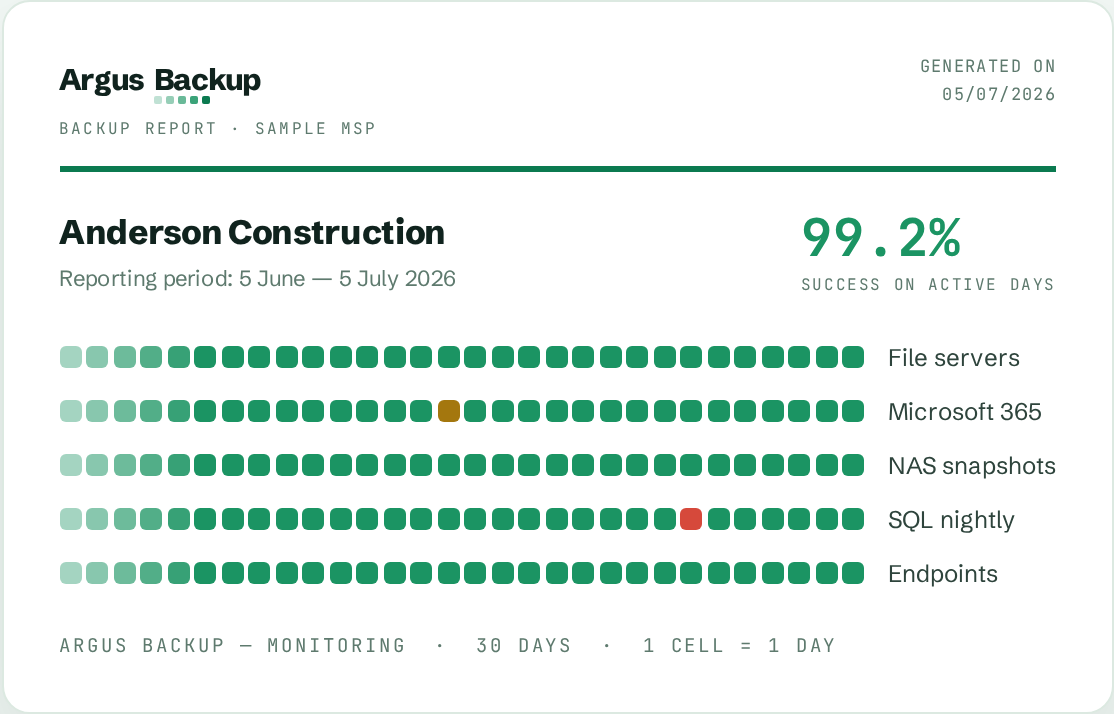
Monthly or weekly per customer, in your branding. The same status weave your customers learn to read at a glance — success rate, incidents, every job, every day.
ARGUS — BACKUP MONITORING · 30 DAYS · 1 CELL = 1 DAY
"We replaced our old monitoring in an afternoon. The next morning Argus had already matched nine out of ten reports by itself."
MSP owner · Netherlands"A customer switched NAS brands and I did — nothing. The reports just kept landing on the right jobs. That's when it clicked."
Service manager · pilot MSP"The wall runs on our office TV. Customers see their own backups being watched, live. It sells the service for us."
Technical director · pilot MSPSample quotes from the pilot programme — named references follow after launch.
Backup Radar and CheckCentral are solid products — MSPs run their businesses on them. Argus takes a different bet: let a language model read the reports, so nobody maintains parsers or rules. Here's where that lands.
| Argus | Backup Radar | CheckCentral | |
|---|---|---|---|
| How reports are understood | A language model reads each mail — any vendor, any language, any format | Library of vendor-specific parsers | Matching rules you configure per check |
| A new or obscure vendor shows up | Works out of the box | Wait for parser support or use generic matching | Write and test the rules yourself |
| Missed backups (no report at all) | Schedule + margin per job | Yes | Yes |
| Per-item history inside a job | 30-day trail per share, VM or mailbox — including disappeared items | Per-job status focus | Per-check status focus |
| Device-health notices, separated | Own Health page, auto-classified | — | Possible via extra checks you define |
| White-label customer PDF reports | Included, scheduled per customer | Yes | Basic reporting |
| PSA ticketing integrations | On the roadmap — H2 2026 | Mature (ConnectWise, Autotask, Halo…) | Yes |
| Data isolation | Own instance, own database per MSP | Shared multi-tenant platform | Shared multi-tenant platform |
| Getting started | Self-serve, live within a day, no minimums | Onboarding fee + monthly minimum | Self-serve |
| Pricing model | Per job, from $1.50/mo — everything included | Per device/job, volume commitments | Per check, tiered plans |
Comparison based on publicly available information, July 2026 — verify current capabilities and pricing with each vendor. If we got something wrong, tell us and we'll fix it.
A job is one backup task Argus watches — however many customers, users or terabytes are behind it.
| first 250 jobs | $1.50 |
| 250 – 1 000 jobs | $1.25 |
| 1 000+ jobs | $1.00 |
billed in $ · € and £ supported · monthly via Stripe · cancel anytime
Request your subdomain today — we provision the same day.
Get your instance